
A watering system can look perfectly fitted yet leave the furthest pots dry, mist the greenhouse path or fail to lift pop-up sprinklers. In most cases, the timer isn't the cause. It is the relationship between water pressure & water flow. Understanding both helps you choose compatible tubes, drippers, sprinklers and pressure-control components before installation.
For a UK garden, there is no single correct setting. A compact greenhouse drip line has very different needs from a lawn sprinkler circuit or a long run of hanging baskets. The aim is simple: deliver the right amount of water, at a consistent rate, where plants need it.
Water pressure and water flow: the difference
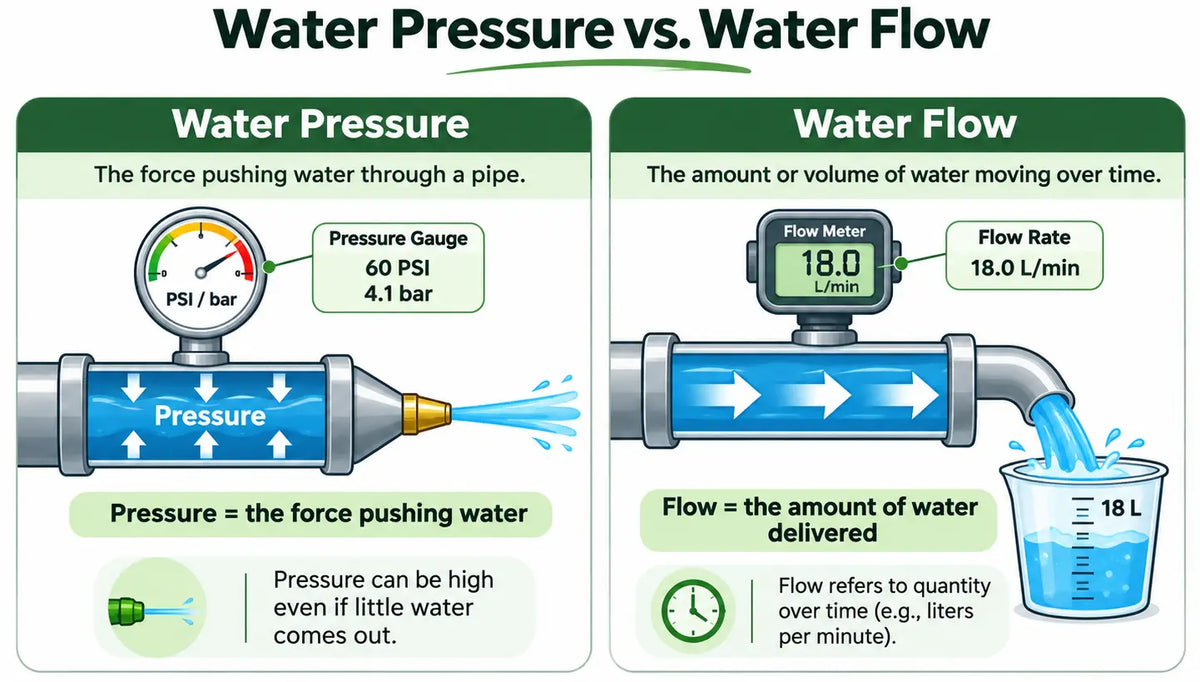
Water pressure is the force pushing water through a pipe. It is usually measured in bar. Higher pressure can help water travel through pipework and operate equipment such as micro sprinklers or pop-up sprinklers. However, too much pressure can cause fittings to blow apart, drippers to discharge unevenly or fine sprays to create more mist than useful watering.
Water flow is the volume of water available over a given time, commonly measured in litres per minute. A tap may have plenty of pressure but limited flow, particularly where the supply pipe is narrow, the hose is long or several household outlets are being used at once. Equally, a high-flow supply does not mean every irrigation component can tolerate its pressure.
Think of pressure as the push and flow as the quantity. Your system needs enough push to operate its components and enough quantity to supply all outlets at the same time. Without one, results are unreliable.
Why garden irrigation systems lose performance
Every metre of tube, elbow, and connector adds resistance. This is normal, but it matters as a system grows. Water pressure gradually drops along the line, especially where many drippers or sprinklers draw water.
A short 13 mm supply tube feeding six adjustable drippers may work well directly from a garden tap. Extend it around several beds, add twenty more outlets and run a micro sprinkler section from the same line, and the final outlets may receive far less water. The first drippers can appear generous while the last ones barely run.
Elevation also changes the calculation. If water must travel uphill to raised beds, wall-mounted pots, or a greenhouse at the top of a slope, some of the available pressure is used just to get it there. A modest change in height may not affect a small setup, but it can be noticeable on longer garden runs.
Pressure can also vary throughout the day. Mains-fed outdoor taps may perform differently when showers, washing machines or other water use is taking place inside the house. Systems supplied from a water butt, pump or solar irrigation kit need their own assessment, as gravity-fed water has considerably less pressure than a mains tap.
Match the component to the available supply
Drip irrigation is generally the most forgiving choice where flow is limited. Drippers deliver water slowly at the root zone, so a system can serve pots, borders and vegetable rows without needing the volume required by a spray-based setup. Pressure-compensating drippers are particularly useful on longer runs or slopes because they maintain a more even output across a suitable operating range.
Standard adjustable drippers offer flexibility, but they need sensible balancing. If you open them fully near the tap, they can take a disproportionate share of the water. Start with similar settings across the line, then make small adjustments after checking the soil around each plant.
Micro sprinklers cover a wider area and suit beds, young plants and greenhouse benches. They need adequate pressure to create an even pattern. If the spray is weak, irregular or only reaches one side, the issue may be insufficient pressure at that point, a blocked nozzle or too many outlets on the same zone.
Pop-up sprinklers are usually used for lawns and need more careful planning. Their stated coverage and throw depend on a specified operating pressure and flow rate. A sprinkler that does not rise fully or throws a short, uneven arc is often under-supplied. Adding more heads to the same line is rarely the answer. Dividing the lawn into separate zones operated one after another is normally more reliable.
When a pressure reducer is the right answer
A pressure reducer lowers and stabilises the pressure entering an irrigation line. It is not an optional extra where the components specify a lower operating pressure. Drip tube, fittings and low-flow emitters can be damaged or perform poorly when connected straight to a high-pressure mains supply.
A reducer is normally fitted near the tap, after the tap connector and before the main irrigation tube. It gives the system a controlled starting point, helping drippers and micro sprinklers work more consistently. It will not create additional flow, though. If the tap supply cannot provide enough litres per minute for the number of outlets, reducing pressure will not solve that capacity issue.
This distinction prevents a common mistake. Use a pressure reducer to protect and regulate compatible low-pressure equipment. Use fewer outlets per zone, larger supply pipework or separate watering times when the real problem is insufficient flow.
A practical way to assess your water supply
Before ordering components for a larger system, test the tap you intend to use. A simple bucket test gives a useful starting figure. Time how long it takes to fill a known volume, then convert the result to litres per minute. Repeat the test at a similar time of day to when the irrigation will normally run.
Pressure is harder to judge by eye, so a tap-mounted pressure gauge is worthwhile if you are planning sprinklers, long pipe runs, or multiple zones. Check both static pressure (tap closed) and working pressure while water is flowing. Static pressure can look impressive but tells you little about what is available once drippers and sprinklers are open.
Also inspect the route. Note the total tube length, changes in height, number of branches and the likely number of outlets operating together. These details are more useful than simply counting plants. Thirty drippers on a short, level line are not the same as thirty drippers spread across a sloping garden with several narrow branch lines.
Build irrigation in zones, not one oversized circuit
Zoning is the practical answer when different areas need different water volumes or equipment. A greenhouse with drippers, a border with micro sprinklers and a lawn with pop-up heads should usually be treated as separate zones. Each can then run for the right duration without compromising the others.
A water timer makes this straightforward. Rather than running everything at once, schedule one zone, then the next. This reduces demand on the supply and allows you to tailor watering to the plants. Tomatoes in a greenhouse, newly planted bedding and established shrubs should not all receive the same programme.
Where possible, use a suitably sized main supply tube before branching into smaller micro tube near individual pots or drippers. The larger main line carries water more effectively over distance. Keep runs tidy, avoid unnecessary sharp bends, and use the correct connectors for the tube diameter so joints remain secure under pressure.
Signs your system needs adjustment
Uneven plant growth is often the first warning. Pots nearest the tap may stay wetter than those at the end of the line, or one section of a border may dry out more quickly. Check soil moisture rather than judging solely by surface appearance, particularly in hot or windy weather.
Other useful clues include drippers that stop after the first few minutes, fittings that leak or pop off, sprinklers with poor reach, and a timer that appears to work while the system itself delivers very little water. Flush the line before fitting emitters, clean filters regularly and check for kinked tubing or blocked nozzles. Debris can imitate a pressure problem.
If the system worked well before you extended it, start by looking at what you added. A few extra drippers may be fine; several extra micro sprinklers can substantially change demand. Splitting the extension into a second zone is often a better fix than increasing every setting.
Set up for dependable watering
The best irrigation system is not necessarily the one with the strongest spray. It is the one that applies water evenly, stays within the limits of its components and can be adjusted as the garden changes. Start with a measured supply, choose equipment suited to it, and allow for expansion rather than adding outlets until performance drops.
Topiary Garden stocks the practical parts needed to build, extend and repair a system, from supply tubes and connectors to drippers, pressure reducers, timers and sprinklers. A little planning around pressure and flow makes those components work together properly, leaving you with healthier plants and fewer rushed watering jobs when dry weather arrives.