
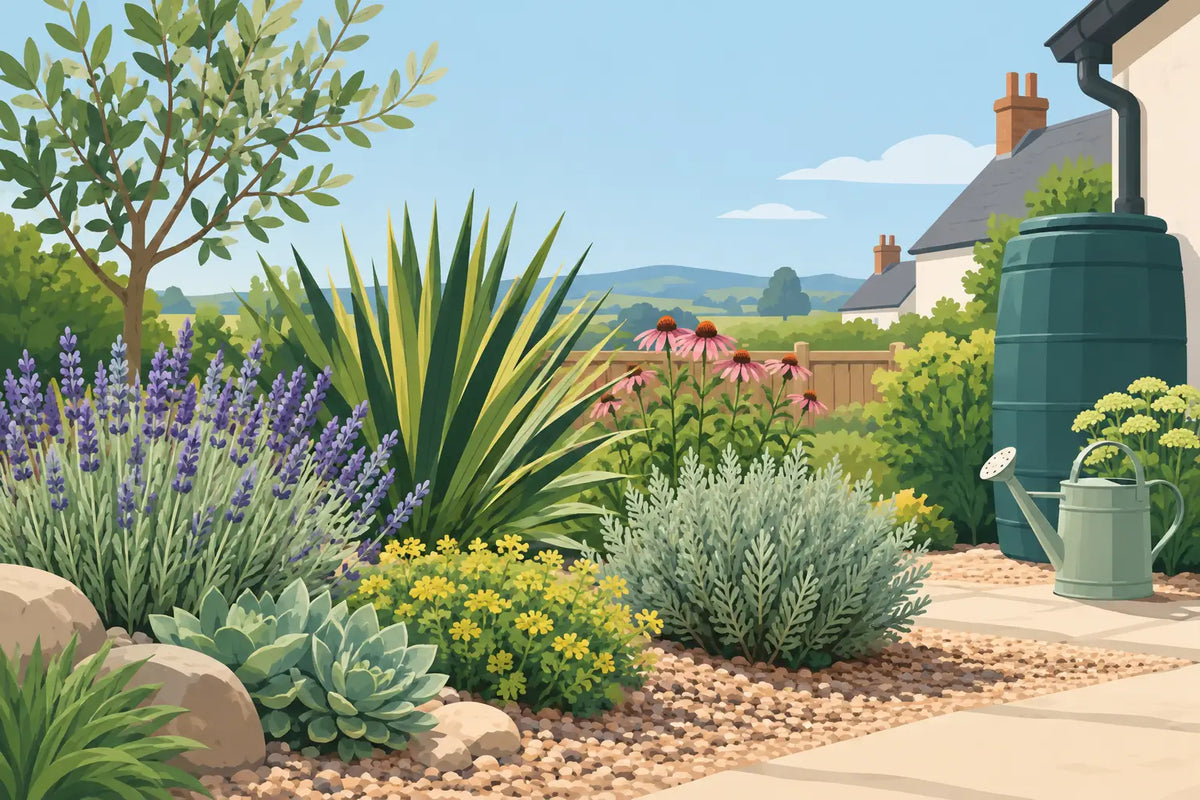
A dry fortnight can turn a promising border into a daily watering job. Pots wilt first, shallow-rooted vegetables follow, and thirsty lawns quickly show brown patches. Drought gardening is not about leaving plants to cope alone. It is about setting up the garden so every litre reaches the root zone, soil holds moisture for longer, and watering remains manageable when hot, dry weather arrives.
For UK gardeners, this means planning for increasingly unreliable summer rainfall while still allowing for heavy showers. The most effective approach combines better soil, sensible planting and controlled irrigation. Start with the areas that dry out fastest, then build a watering system that matches what you grow.
Start drought gardening with the soil
Healthy soil is the garden's most useful water store. A sandy bed drains quickly and needs frequent, measured watering. Heavy clay can hold plenty of water but may bake hard at the surface, preventing rainfall from soaking in. Both benefit from regular organic matter.
Work well-rotted compost, leaf mould or composted manure into beds before planting, and add a lighter top-up around established plants where practical. Organic matter improves soil structure, helping it absorb water rather than shed it down paths or into drains. It also supports roots, which gives plants access to a larger reserve of moisture.
Mulch is the next practical layer. Apply around 5cm of compost, bark or other suitable mulch over damp soil, leaving a small clear space around stems and crowns. This slows evaporation, suppresses weeds that compete for water, and reduces the temperature swings that stress roots. On vegetable beds, clean straw can work well around courgettes, beans and fruiting plants, provided slugs are not already a problem.
Do not mistake a dry-looking surface for dry soil below. Push a trowel or finger several centimetres into the ground before watering. Repeated light watering encourages roots to stay near the surface, where they are least able to cope with heat. A slower, deeper soak trains established plants to root further down.
Choose plants for the place, not just the label
Drought-tolerant plants still need watering while they establish. The first season, and often the first full year for shrubs, is when consistent root-zone watering matters most. Once established, plants suited to their position require far less intervention than moisture-loving choices planted in a hot, exposed border.
Mediterranean herbs such as rosemary, thyme, sage and lavender suit free-draining sunny areas. Sedums, euphorbias, achilleas, ornamental grasses and many hardy geraniums can also cope well once rooted in. For a more sheltered or heavier-soil garden, choose carefully: drought tolerance does not mean a plant will enjoy winter waterlogging.
It pays to group plants by their water needs. Keep thirsty crops, hanging baskets and containers close to a water source or on a dedicated irrigation line. Put tougher shrubs and established perennials on a separate zone. This avoids watering a whole border to satisfy a few plants that need more frequent attention.
Lawns need a realistic decision too. An established lawn often turns brown in a dry spell but recovers when rain returns. Watering the lawn daily can use a large volume for little lasting benefit, particularly where hosepipe restrictions apply. Prioritise newly laid turf, recently seeded areas and plants that cannot recover as readily.
Use drip irrigation for drought gardening
Drip irrigation is usually the most efficient choice for beds, raised beds, greenhouse borders, pots and productive growing areas. Water is released slowly near the base of each plant rather than sprayed across foliage or bare ground. That means less loss to wind and evaporation, fewer wet leaves, and a more consistent moisture level around the roots.
A straightforward system begins with a tap connector, filter and pressure reducer, followed by main supply tube and smaller distribution tube where needed. From there, fit adjustable drippers, fixed-flow drippers or drip line according to the planting layout. Stakes keep tube and drippers in position, while connectors, elbows and tees let the system follow borders and work around paths.
The right emitter depends on the job. Adjustable drippers are useful where pot sizes vary or plants have different needs. Fixed-flow drippers provide predictable output and suit repeat planting. Drip line works well in straight vegetable rows and closely planted beds. For a greenhouse bench or several containers, individual drippers on micro tube give more precise control.
Micro sprinklers have a place too, especially for seedlings, densely planted salads or larger greenhouse areas that need gentle coverage. They use more water than drippers, so run them for a controlled period and avoid using them in breezy, exposed positions. Pop-up sprinklers are better suited to lawn areas and should be planned as a separate zone from beds and containers.
Before buying components, sketch the garden and count the watering points. Measure approximate pipe runs, identify the tap position and note whether pots are grouped or spread around the patio. This avoids an awkward system with too many joins, insufficient tube, or drippers placed where they cannot reach the root ball.
Add a timer, but check what it is doing
A water timer removes the risk of forgetting a watering session and is particularly useful during holidays. It can run drip irrigation early in the morning, when evaporation is lower and plants have time to take up moisture before the hottest part of the day. Evening watering can also work, although repeatedly wet foliage overnight may encourage disease with some crops.
Automation is only efficient when the schedule reflects the weather and the soil. A timer should be adjusted during cool, wet periods rather than left on a fixed summer programme. Rain sensors can pause compatible systems after rainfall, while a simple manual check under the mulch tells you whether watering is genuinely needed.
Run times depend on flow rate, soil type, weather, plant size and the number of emitters. There is no useful one-setting answer. Start conservatively, inspect the soil after a cycle, and adjust until moisture has reached the active root area without pooling or running off. In containers, check that water is reaching the compost rather than escaping straight through dry gaps at the side of the pot.
For gravity-fed water butts or sites without a convenient outdoor tap, solar irrigation can be a practical option for a small group of pots, a greenhouse or a compact raised bed. It is not designed to replace a mains-fed system across a large garden, but it can keep high-value plants supplied where hand watering is difficult.
Give containers and crops their own plan
Pots are the weak point in most dry gardens. Their compost volume is small, dark containers heat up quickly, and hanging baskets can dry out within hours in warm wind. Use larger containers where possible, choose peat-free compost with good water-holding capacity, and leave a watering gap below the rim. Grouping pots together gives them a little shelter and makes drip irrigation easier to install.
Fruit, vegetables and greenhouse crops should not be treated as drought-tolerant simply because they are growing well. Tomatoes, cucumbers, peppers, runner beans, courgettes and leafy crops need steady moisture to crop reliably. Wild swings between very dry and very wet compost can lead to split fruit, blossom-end rot or poor development.
For these areas, use one dripper per small pot and two or more for larger containers, grow bags or substantial plants. Check each outlet at the start of the season and after moving pots. A blocked dripper or kinked micro tube can leave one plant dry while the rest of the system appears to be working normally.
Maintain the system through the season
Efficient watering relies on simple checks. Clean filters regularly, especially where water contains debris from a butt or older pipework. Flush tube before fitting end stops at the start of the season, then inspect joins, valves and drippers for leaks. A small leak may not look serious, but it wastes water and can reduce pressure further along the line.
As plants grow, move drippers out from the original planting point so water reaches the expanding root zone. Lift mulch briefly when checking output, then replace it once the soil is damp. At the end of the season, drain exposed equipment where frost is likely and store timers or sensitive parts according to their instructions.
Topiary Garden offers the practical parts needed to build, extend and repair a system, from irrigation tube and drippers to pressure-control fittings and timers. Buying compatible replacement components also means a small repair need not become a complete rebuild.
Drought gardening works best when it becomes part of normal garden maintenance rather than an emergency response to a heatwave. Improve the soil a little each season, mulch before the weather turns dry, and make sure water is delivered slowly where plants can use it. The result is less time standing with a hose and more confidence that the garden can cope when rain is scarce.