
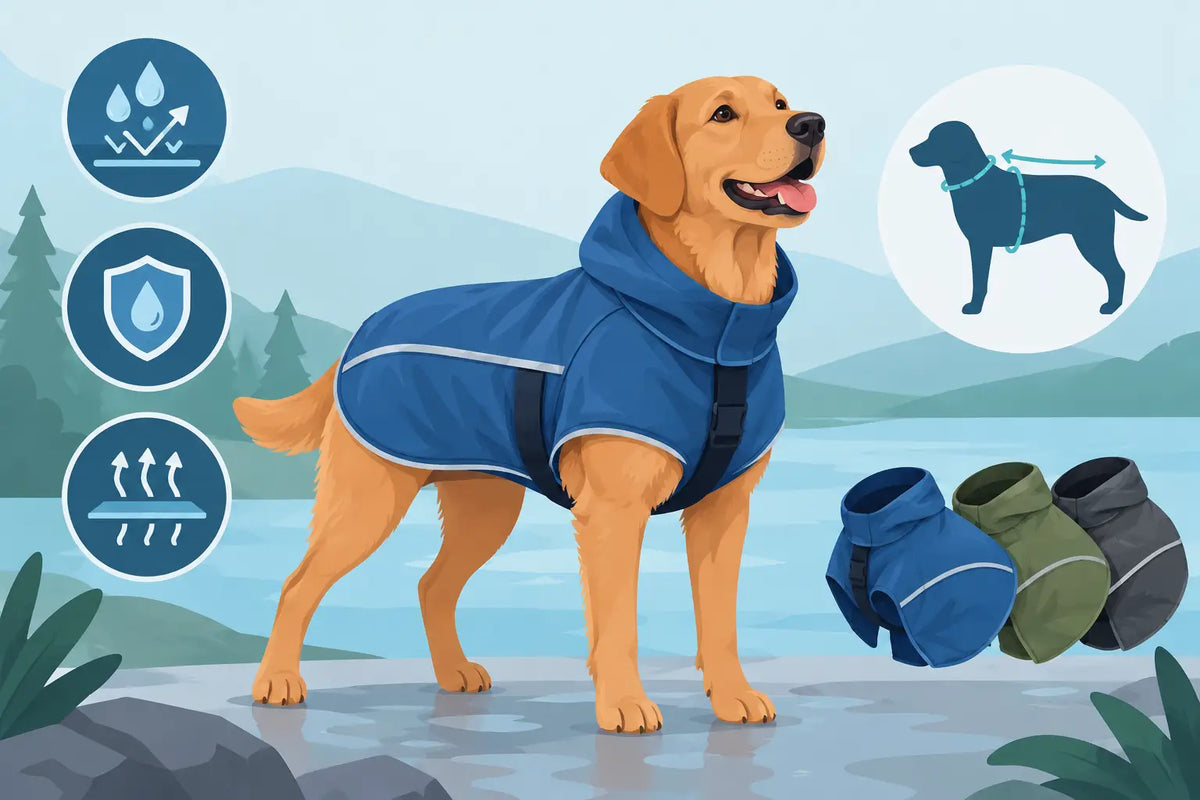
A wet dog can turn a short walk into a muddy hallway, a cold car journey and a lengthy towel-down. A waterproof dog jacket will not suit every dog or every shower, but it can make daily walks far more manageable when rain, wind and mud are part of the forecast. The right jacket keeps the body covered without restricting movement, stays put when your dog pulls ahead, and is simple to rinse clean after use.
For UK owners, the practical question is not whether a jacket looks smart. It is whether it keeps a dog comfortable in the weather you actually walk in, while standing up to regular use.
When does a dog need a waterproof jacket?
A healthy, active dog with a thick double coat may be perfectly comfortable in light rain. Many dogs enjoy wet weather and do not need an extra layer for a quick walk. However, waterproof clothing is useful when a dog gets chilled easily, takes longer to dry, or needs more protection from persistent rain and wind.
Short-haired breeds, small dogs, older dogs and lean dogs often feel cold sooner than large, heavily coated breeds. A waterproof jacket can also be helpful for dogs recovering from illness or injury, provided it is suitable for their condition and any advice from a vet is followed. Dogs that spend time standing still at the school gate, beside a sports pitch or on a slow lead walk can lose warmth more quickly than dogs running freely.
Coverage also reduces the amount of water and dirt carried into the house or car. It will not remove the need to dry paws and underside fur, but it can keep the back, chest and shoulders noticeably cleaner. For owners managing muddy garden paths and wet grass, that makes a genuine difference.
Waterproof, water-resistant or showerproof?
These terms are often used loosely, so check the product description rather than relying on the name alone. A showerproof jacket is intended for a brief light shower. It may shed surface water well, but prolonged rain can work through the fabric or seams.
A water-resistant jacket offers a step up, often with a treated outer material. It suits damp conditions and occasional rain, although performance drops as the coating wears or gets dirty. A properly waterproof dog jacket is the better option for regular wet-weather walks. Look for a waterproof outer layer, sensible overlap around openings and, where stated, taped or sealed seams.
Waterproofing is only half the decision. A completely non-breathable jacket can trap warmth and moisture during energetic walks, especially on a mild day. For a lively dog, choose a design with room for airflow, and avoid adding thick insulation just because it is raining. Cold rain and a brisk winter wind call for different protection than a warm autumn downpour.
Start with fit, not breed label
Breed guides are a useful starting point, but two dogs of the same breed can have very different chest widths, back lengths and body shapes. Measure your dog while standing naturally before choosing a size. The key measurement is usually from the base of the neck to the base of the tail, but chest girth and neck circumference matter just as much.
A jacket that is too short leaves the back exposed to rain. One that is too long can catch near the tail, interfere with toileting or shift from side to side. The chest should be covered without pressing into the throat or limiting the front legs. Adjustable straps are particularly useful for deep-chested dogs and growing dogs, as they allow a closer fit without overtightening the body.
Once fitted, watch your dog walk, sit and shake. These everyday movements quickly show whether a jacket is comfortable. It should not bunch behind the front legs, twist around the body or pull back at the neck. You should be able to slide your fingers beneath the straps, but it shouldn't be loose enough for a dog to step out of it.
Check these areas before the first wet walk
A practical fit check takes a minute and can prevent rubbing or a lost jacket halfway round the park:
- The neck opening should sit securely without pressing on the collar area.
- The chest panel should cover the front without restricting shoulder movement.
- Fastenings should lie flat and stay clear of the armpits and elbows.
- The rear edge should allow your dog to toilet normally and move its tail freely.
If your dog wears a harness, check that the jacket works with it. Some designs have a lead opening positioned for a harness ring, while others are better suited to a collar. Do not force a lead through a gap that is not designed for it, as this can pull the jacket out of place or strain the fabric.
Choose coverage for the walk you do
A lightweight back cover is often enough for quick toilet breaks and gentle walks in drizzle. It is easy to put on, dries quickly, and adds little warmth. For exposed routes, longer walks or dogs that feel the cold, a jacket with chest coverage and a more secure belly fastening offers better protection.
Full-body styles can keep more mud off long-coated dogs, but they take longer to fit and can be less convenient for everyday use. They are also more likely to rub if the sizing isn't exact. For most owners, a well-cut jacket that covers the back and chest provides the best balance of weather protection, freedom of movement and simple handling.
Reflective trim is worth considering for darker mornings and evenings. It does not replace a light or careful road awareness, but it makes a dog easier to spot under street lighting and car headlights. A bright colour can also be useful in woodland, long grass or busy parks where visibility matters.
Fastenings need to be secure and simple
Wet hands, muddy gloves and an impatient dog make complicated fastenings frustrating. Hook-and-loop straps are quick to adjust and practical for most dogs, but they need cleaning regularly. Hair, grass seeds and grit can reduce their grip over time.
Buckles and clips can provide a firm hold, particularly on active dogs, although they should be easy to operate without pinching fur. Elasticated sections can improve movement, but they should support the fit rather than make up for an incorrectly sized jacket. Check seams, strap stitching and attachment points before use, particularly if your dog tends to pull or roll.
Remove the jacket once the walk is over. Leaving a damp jacket on indoors can make a dog uncomfortable and may cause rubbing, especially beneath the chest straps. Never leave a dog unattended while wearing any coat or jacket, as straps can catch on garden furniture, branches or crate fittings.
Keeping a dog jacket waterproof for longer
Mud and body oils gradually affect fabric performance, so regular care matters. Shake off loose dirt after each walk and allow the jacket to dry fully before storing it. If it needs washing, follow the care label closely. Harsh detergents and fabric conditioner can damage water-repellent treatments, while high heat can affect some coatings and fastenings.
Rinse muddy jackets promptly rather than letting dirt dry into the fabric. Check hook-and-loop tabs for hair and inspect the lining for signs of rubbing or wear. If water starts soaking into the outer material instead of beading on the surface, the jacket may need reproofing or replacement, depending on its age and condition.
A waterproof jacket is a working item, not something to save for the worst weather. Keep it near the lead, towels and outdoor shoes so it is ready for a wet morning. When the fit is right and the fabric suits the season, you can head out promptly, keep your dog more comfortable, and bring less of the weather back through the front door.