
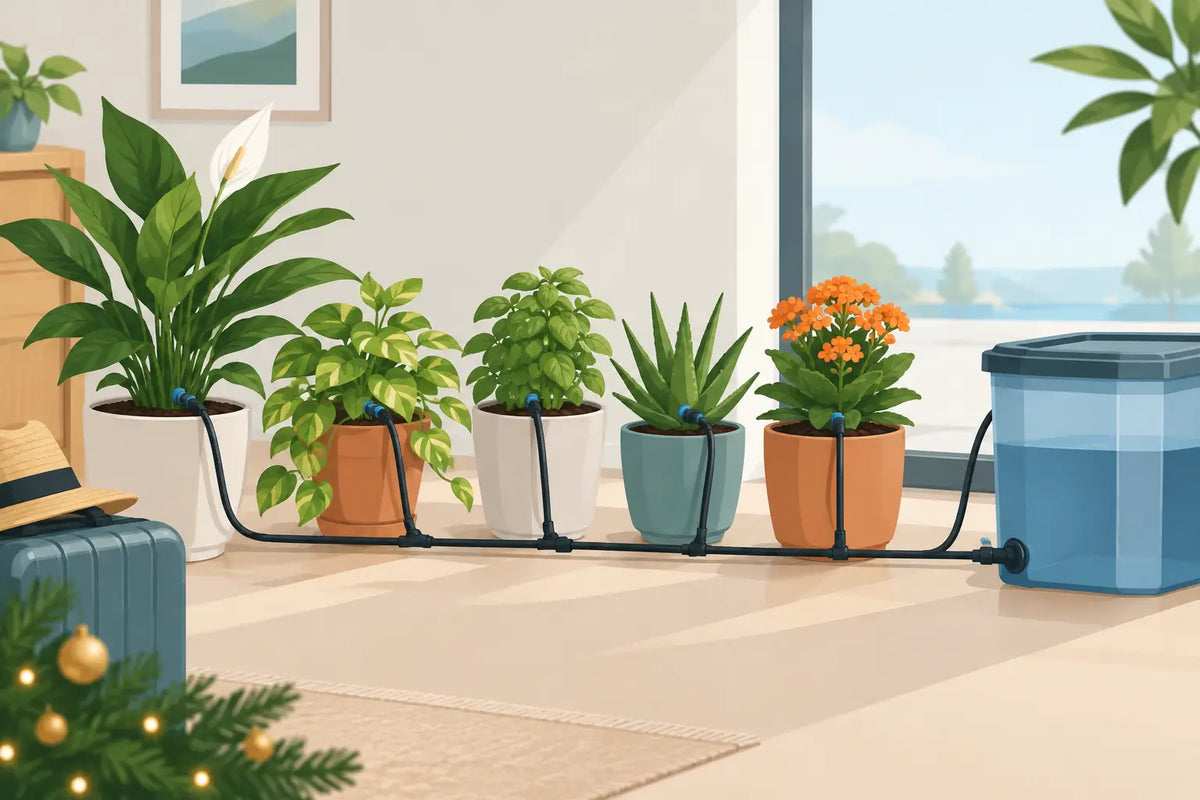
A few hot days can undo weeks of careful growing, particularly where pots, hanging baskets and greenhouse crops are concerned. A holiday watering system for plants gives roots measured water at the right time, rather than relying on a neighbour with a hose or hoping for rain. The aim is not to soak everything. It is to provide steady, reliable moisture while you are away.
For most UK gardens, a timer-controlled drip system is the practical answer. It uses less water than hand watering, delivers it close to the roots and can be adjusted for containers, borders, raised beds and productive growing areas. The system does need setting up properly before departure. A timer cannot correct a blocked dripper, a loose connector or a pot standing in full sun with too little water allocated to it.
Choose the right holiday watering system for plants
Start with the plants that will suffer first. Small pots, hanging baskets, tomatoes, cucumbers, peppers and greenhouse seedlings have limited compost volume and can dry out quickly. Established shrubs and well-rooted border plants usually cope better with a short absence, especially after rain, but newly planted specimens still need attention.
A tap-fed drip irrigation set-up suits most gardens with an outside tap. Fit a water timer at the tap, connect the main supply tube, then run smaller distribution tubing to the areas that need watering. Drippers or adjustable micro sprinklers can be placed at each pot, growbag or planting point. This gives you control over both watering duration and the amount delivered to individual plants.
For a patio full of containers, use a main tube around the edge of the area with take-offs leading to each pot. One or two drippers per container will usually be more effective than a spray head because water goes into the compost rather than onto paths and foliage. Large pots may need more than one dripper, particularly where they contain thirsty climbers or mature specimens.
Raised beds and vegetable rows benefit from dripline or spaced drippers laid along the planting line. In a greenhouse, use drippers for pots and growbags, keeping the pipework clear of doorways and working areas. Micro sprinklers can cover a broader bed, but they are not always the best choice for tomatoes or cucumbers, where regularly wet foliage can encourage disease.
A solar irrigation kit can be useful where there is no convenient tap, such as an allotment greenhouse or a group of pots away from the house. Its limitations are water capacity and pump output. Calculate how many days it must run, make sure the reservoir is large enough, and test it in the same weather conditions you expect while away.
Match water delivery to the plant and position
The correct run time depends on your soil, compost, weather, plant size and system flow rate. There is no single timer programme that suits every garden. A shaded ceramic pot planted with herbs may only need a modest amount, while a black plastic pot of flowering annuals against a south-facing wall may need daily watering in warm weather.
Drippers provide a measured output, which makes them easier to plan around than an open hose. If a dripper supplies two litres per hour and your pot needs roughly one litre at each watering, a 30-minute run is a sensible starting point. Check the actual output before you go, as pressure, tubing length and the number of outlets on the line can affect delivery.
For containers, water often needs to run daily during summer. Early morning is generally the best time because less water is lost to heat and plants begin the day with moisture available around their roots. In very warm, exposed conditions, a second short watering may be necessary. Avoid using a long evening programme as the default for greenhouse crops, especially if ventilation will be limited.
Borders are different. A deeper, less frequent watering encourages roots to grow down rather than sit near the surface. If your established bed is mulched and the forecast is unsettled, it may need little or no automatic watering for a short holiday. Newly planted borders, sandy soil and rain-sheltered areas are the exceptions.
Build a system that will not fail halfway through your break
A simple layout is usually the most dependable. Use properly matched tubing, connectors and stakes so pipework stays in place when the system comes under pressure. Avoid forcing an oversized tube onto a fitting or mixing components that do not seal correctly. A small leak may not look serious during a test, but it can leave the final pots on a line dry.
Where mains pressure is high, use a suitable pressure reducer before drip irrigation tubing. Drippers and micro irrigation fittings are designed to work within a controlled pressure range. Excess pressure can cause joints to blow apart or make delivery uneven. A filter is also worthwhile if your water supply carries sediment, as small dripper outlets can block.
Keep the route direct. Long runs with too many branches can reduce flow at the far end, especially if every outlet operates at once. Split a large garden into zones if required, or use separate timer programmes where the tap timer allows it. This is particularly helpful when one area contains pots requiring daily watering and another contains beds that only need occasional irrigation.
Secure tubing with stakes, especially around corners, steps and container groups. Keep it away from mower routes and places where doors or greenhouse staging can crush it. Leave a little slack around pots so the pipe is not pulled tight when containers are moved.
Test it as if you were already away
Do not install the system on the morning you leave. Run it for several days first and inspect it during and after each cycle. This gives you time to correct uneven watering and find the small issues that cause most holiday irrigation problems.
Use this pre-holiday check before relying on the system:
- Confirm the timer starts and stops at the programmed times, with fresh batteries fitted where required.
- Walk the whole line while it is running and check every connector, end cap and take-off for leaks.
- Look at the final drippers on each run to make sure they are delivering water, not just the first ones near the tap.
- Check that water reaches the root zone and is not running down the outside of a dry rootball or pooling beneath a pot.
- Clean filters and flush the line before fitting or refitting drippers.
Reduce demand before you leave
Irrigation works best alongside straightforward preparation. Grouping pots together reduces wind exposure and creates a slightly more sheltered, humid area. Move the most vulnerable containers out of intense afternoon sun where possible, but do not relocate plants that need full light into deep shade for a fortnight.
Water deeply by hand the day before you leave, including beds that are not connected to the system. Add a layer of mulch around border plants and large containers, keeping it clear of stems. Mulch slows evaporation and helps prevent the surface from baking hard, but it does not replace watering for pots in hot weather.
Remove tired flowers and any badly damaged foliage before travelling. This will not transform a plant's water needs, but it can reduce stress and make the plant easier to inspect when you return. Avoid applying a strong feed immediately before going away, as it can encourage soft new growth that needs more water.
If a trusted person will check the garden, give them a simple instruction: inspect the timer, look for obvious leaks and check the most exposed pots. They should not need to understand the whole layout. A clearly labelled tap, timer and isolation point makes help much more useful if a problem occurs.
When a timer is not enough
A timer adds consistency, but it cannot respond to sudden heavy rain, exceptional heat or a failed water supply. Rain sensors can prevent unnecessary irrigation where compatible with your set-up, and are particularly useful for open beds and lawns. They are less relevant for a greenhouse, under an overhang or beneath dense foliage, where rain may not reach the root zone.
For longer trips, consider the consequences of a fault. A well-designed system should not leave water running freely if a tube comes loose, and it should be easy to isolate. Check local water regulations and use suitable backflow protection where needed. If you are away for several weeks, arranging a garden check remains sensible even with automatic watering in place.
Topiary Garden stocks the practical parts needed to build, extend or repair a system, from timers and main tubing to drippers, connectors, stakes and pressure-control fittings. Buying the correct component for the tube size and job is usually cheaper and more reliable than replacing an entire set-up.
Set the system running, test every outlet and leave plants with a sensible amount of protection from heat and wind. When you return, check the compost before changing the programme - your garden will show you whether the watering schedule was right.