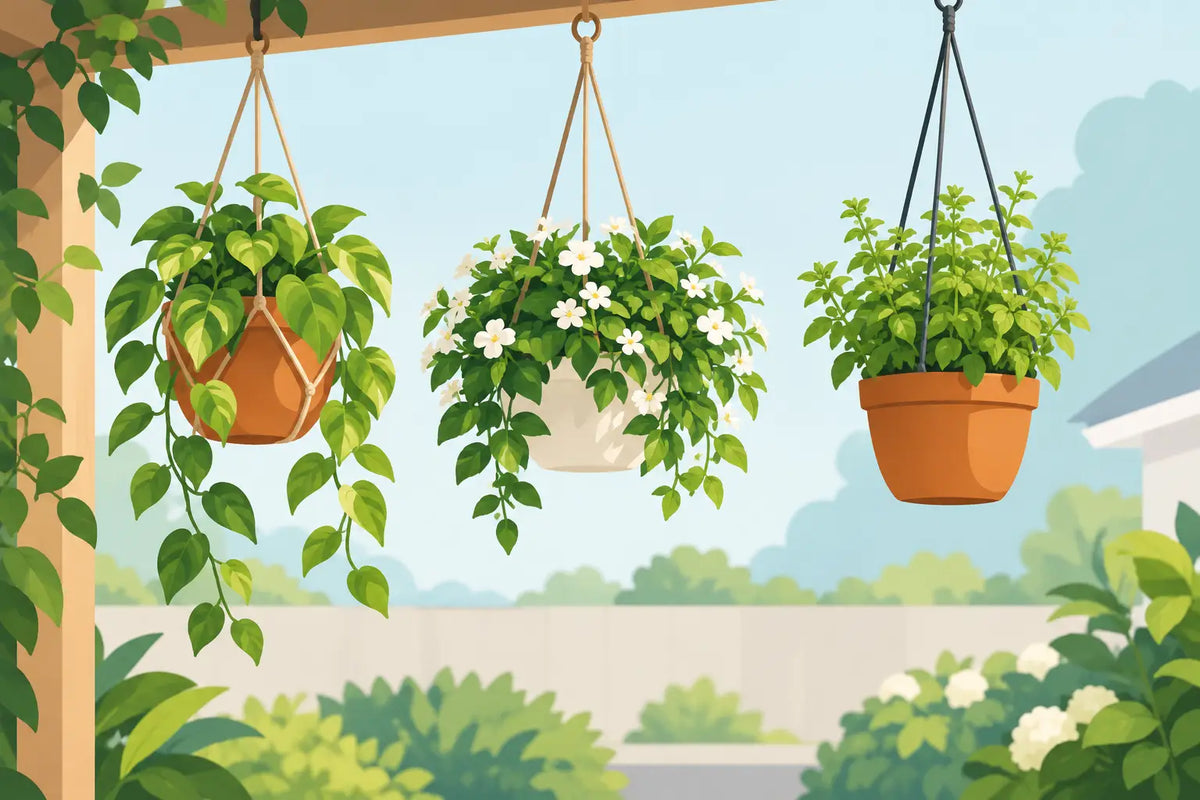
A hanging display can look excellent on the day it is planted, then struggle within a week of warm, dry weather. The reason is usually simple: hanging pots have limited compost, exposed sides and roots that dry out faster than plants growing in beds. Choosing the right pot and setting up a reliable watering routine makes the difference between regular replacement planting and a display that stays healthy.
Choose hanging pots for the job
Start with where the pot will hang, not with the plant. A sheltered porch, a sunny south-facing wall and a windy fence line create very different conditions. Hanging pots beneath an overhang may receive almost no rain, while those in an exposed position can lose moisture quickly and put extra strain on chains, brackets and hooks.
The pot needs enough volume for the mature root system. Small containers are lighter and easier to hang, but they hold less compost and need more frequent watering. For a long-lasting summer display, a larger pot is generally the more practical option. It gives roots more room, holds a useful reserve of moisture and is less affected by a single missed watering.
Material matters too. Plastic hanging pots are light, economical and retain moisture well, making them a sensible choice for busy households and holiday watering. Terracotta and ceramic pots can suit a particular garden style, but they are heavier when wet and often dry compost more rapidly. Check the load rating of the bracket or fixing before filling any pot. Compost, water and established plants can weigh far more than expected.
A built-in saucer or water reservoir can help, particularly for plants on a sheltered wall. It is not a substitute for watering, however. Roots still need oxygen, so avoid standing the base permanently in water. Good drainage holes remain essential.

Drainage, compost and planting depth
Compost in a hanging container needs to retain moisture without becoming compacted. A good-quality peat-free multipurpose compost is a dependable starting point for most flowering plants, foliage displays,s and trailing varieties. Mixing in a small amount of water-retaining granules can be useful in a hot position, but use them as directed and do not rely on them to correct poor watering.
Make sure drainage holes are clear before planting. Covering them with a small piece of broken pot or coarse material can stop compost from washing out, although a thick drainage layer isn't necessary and reduces valuable root space. Fill the container so that the top of the rootball sits just below the rim. Leaving a watering gap of around 2 to 3 cm prevents water running straight over the sides.
Firm plants in gently, then water thoroughly until excess begins to drain. This settles compost around the roots and reveals whether water is reaching the full depth of the pot. A light daily sprinkle may wet only the surface, leaving lower roots dry.
Match plants to the position
The best plants for hanging pots depend on light, wind and how often you can water. A bright, sunny location suits sun-loving trailing plants and many herbs, provided you keep moisture consistent. Shadier areas suit foliage plants and shade-tolerant flowers. It is tempting to pack pots tightly for an immediate full display, but overcrowding creates competition for water and nutrients and reduces air movement.
For productive growing, compact tomatoes, strawberries, salad leaves and trailing herbs can all work well in suitably sized containers. They need a more disciplined feeding and watering schedule than ornamental displays. Tomatoes in particular can suffer from uneven watering, which contributes to problems such as fruit splitting and blossom end rot.
A useful rule is to group plants with similar needs. Avoid combining a drought-tolerant herb with a thirsty flowering annual in the same hanging pot. One plant will always be receiving the wrong amount of water.
Seasonal changes matter
Summer is the testing period for most hanging displays. In warm weather, a well-stocked pot may need watering once a day and sometimes twice in exceptional heat or wind. Check compost rather than relying on the calendar. If it feels dry a few centimetres below the surface, water slowly and fully.
In spring and autumn, plants use less water and lower temperatures slow evaporation. Reduce watering frequency, but do not let pots beneath covered areas dry out completely. During winter, hardy hanging plants still need drainage. Waterlogged compost and repeated freezing can damage roots and crack some containers.
Water hanging pots efficiently
Hand watering is straightforward for a few pots within easy reach. Use a watering can with a rose or a watering lance that lets you direct water into the compost without soaking walls, paving or foliage. Water in the early morning where possible. Plants can take up moisture before the hottest part of the day, and less water is lost to evaporation.
For several hanging pots, high positions or frequent time away from home, a drip irrigation set-up is usually the more reliable answer. It delivers water directly to each container and removes the guesswork from daily watering. A timer allows the system to run at set times, which is especially useful during dry spells and holidays.
A practical hanging-pot irrigation arrangement normally includes a main supply tube, smaller distribution tube, connectors, stakes or clips to secure the line, and drippers at each pot. Pressure regulation may be needed depending on the water source and the components used. The aim is steady, even delivery, not a fast flow that floods one pot while leaving another dry.
If pots are at different heights, check the output after installation. Water pressure and run length can affect how much each dripper delivers. Run the system for a full cycle and inspect every container. Adjust the dripper position so water lands on the compost near the root zone, rather than on trailing stems or outside the rim.
Set the schedule by checking the compost
There is no single timer setting that suits every garden. Pot size, plant type, weather, exposure and compost all change the result. Start with a modest, regular watering cycle, then check the moisture level after several runs. Increase duration in hot weather rather than assuming a longer daily schedule is always better.
A timer is valuable because it is consistent, but it should still be reviewed. Rain does not always reach hanging pots tucked under eaves, while a period of cool, wet weather may mean less water is needed. A rain sensor can help with exposed displays, but sheltered pots should be checked separately.
Feed without forcing soft growth
Nutrients wash through containers quickly, particularly when watering is frequent. Once plants are established, use a suitable liquid feed at the recommended dilution. Flowering displays often benefit from regular feeding during their active growing period, while edible crops should receive a feed appropriate to what you are growing.
More fertiliser is not better. Overfeeding can produce soft, leafy growth that is more vulnerable to pests, wind damage and stress. If leaves yellow or flowering is poor, first check watering, drainage, root room and light levels. Feeding only solves a nutrient shortfall.
Keep fixings and plants in working order
A quick weekly check prevents most problems from becoming expensive or inconvenient. Check the bracket, hook, chains and pot rim as well as the plants. Replace damaged fittings immediately, and make sure pots are not rubbing against brickwork, fencing or glass in the wind.
Remove spent flowers and yellow leaves to keep displays tidy and encourage continued flowering where appropriate. Trim back long, straggly trailing growth rather than letting it pull the container out of balance. Check for aphids, slugs and vine weevil damage, particularly if plants are weakening despite adequate watering.
Hanging pots work best when treated as small growing spaces rather than decoration that can be forgotten. Give each pot enough root room, a secure fixing and water delivered at the right rate. Once those basics are in place, keeping a healthy display through a dry British summer becomes far more manageable.